Dispatch from Brussels
George Ttoouli reports from the Green European Foundation's General Assembly, 12-13 November 2026, representing Green House Think Tank as an observer member.
This year’s Green European Foundation (GEF) General Assembly in Brussels brought together Green European organisations under the theme of adaptation. Not in the sense of adaptation to climate change, a term some argue has been effectively co-opted by the political right to prevent meaningful systemic change, but adapting the Green political approach. The current context for the Green movement has clearly shifted. We are no longer fighting to prevent climate change; it is here, and we need to change our approach accordingly.
Throughout the Assembly, references were made to 2026’s tragic ‘Summer of Truth’. A BMJ report attributed around two-thirds of over 50,000 deaths from heatwaves – “in urban areas” alone – to climate change. Nearly 3000 of these deaths were in the UK. The science is clear, and political leaders are still not acting. For Assembly participants, then, the challenge focused on how to adapt from policy creation to political organisation. How do Greens gain the power to change the course of society, and quickly?
Surprisingly to me, as a first time attendee, the Green Party of England & Wales served as a positive model for Greens across Europe. The electoral successes, cut through of messaging and effective political organisation are an inspiration for other Green parties seeking to gain power. One attendee told me they campaigned in England during the 2025 local elections, simply to skill up. Others are taking note of how Zack Polanski has connected ecological and social justice through strong emotional campaign communications, growing the movement beyond the margins most Green parties are relegated to.
Against this, another recurring element in discussions was the rise of the far right. Across Europe, well-funded extremists are also delivering deeply emotional messages that contradict Green positions. With all kinds of media, not just social, favouring right wing discourse, the odds seem stacked against Greens, even as evidence of the polycrisis has become unavoidable.
Right-wing control of the European Parliament (by the European People’s Party, or EPP) has put Greens in a defensive position. Key wins under previous parliaments, such as banning the internal combustion engine and tobacco restrictions, are at risk of being rolled back. Tobacco industry lobbyists have met over 300 times with Europe’s right-wing representatives since 2024’s new term. Without sufficient representation to share power or influence decisions, the Greens’ defensive position is weak.
Added to this, the pressure points through which Greens might gain further political influence, whether direct or indirect, are as much under threat as past wins. Concepts like degrowth and postgrowth manifest as too utopian and, like many Green ideas, have been associated by right-wing commentary with wanting to change people’s behaviours instead of systemic inequalities. Other terms, like adaptation and abundance, have been appropriated by right-wing discourse to offer up business-as-usual modes of capitalist extraction that do nothing to reduce emissions or consumption.
A further factor undermines Green positions. The movement stands up for communities most impacted by climate change, which typically means those with the least power in public discourse. In contrast, super-rich polluters are increasingly funding climate obstruction by working across a powerful complex of actors in the media, think tanks and political representation to block new policies that might reduce emissions and inequality.
Working with social democratic movements appears necessary, building a stronger grassroots through unionisation. A good example delegates offered came from the health sector. The COVID-19 pandemic should have rewarded health workers with more than just claps, but left behind staff shortages in the hundreds of thousands due to perceptions of stressful working environments, among other factors. The question of ‘preparedness’ for climate change is an important one, as poor working conditions are exacerbated by extreme weather, but mainstream politics has instead been building its preparedness narrative around militarisation.
Yet the EPSU, a trade union federation representing eight million public sector workers, has organised a number of successful strikes on climate and fair pay. Their surveys found 30% of health workers do unpaid overtime; 80% of those staff are women who arrive home too tired to deal with basic household chores or childcare. Growing ethical stress is another, related concern, as the demands of austerity force staff to make difficult decisions. And there is no contractual provision in many countries for working in extreme weather conditions. Through targeted actions, EPSU members recently gained protections in Belgium, Turkey, Ireland and Cyprus, demonstrating the power and vitality of collective action.
The idea of an ecosocial welfare state was key to discussions of Europe’s Green future and what that might look like. Fortunately, the Assembly is an excellent space for policy makers and organisers alike to draw on positive international experiences. So, Serbia’s landmark adoption of an Environmental Protection Strategy marks the beginning of its green transition and offers a model of what ecosocial welfare might resemble. From Portugal, the notion of ‘La Vida Plena’ (‘The Plentiful Life’, in turn taken from Sumak Kawsay, a Quechuan term used by indigenous groups resisting extractivism in Latin America from the 1990s), ties into discussions of what a good life looks like beyond flawed capitalist metrics like GDP.
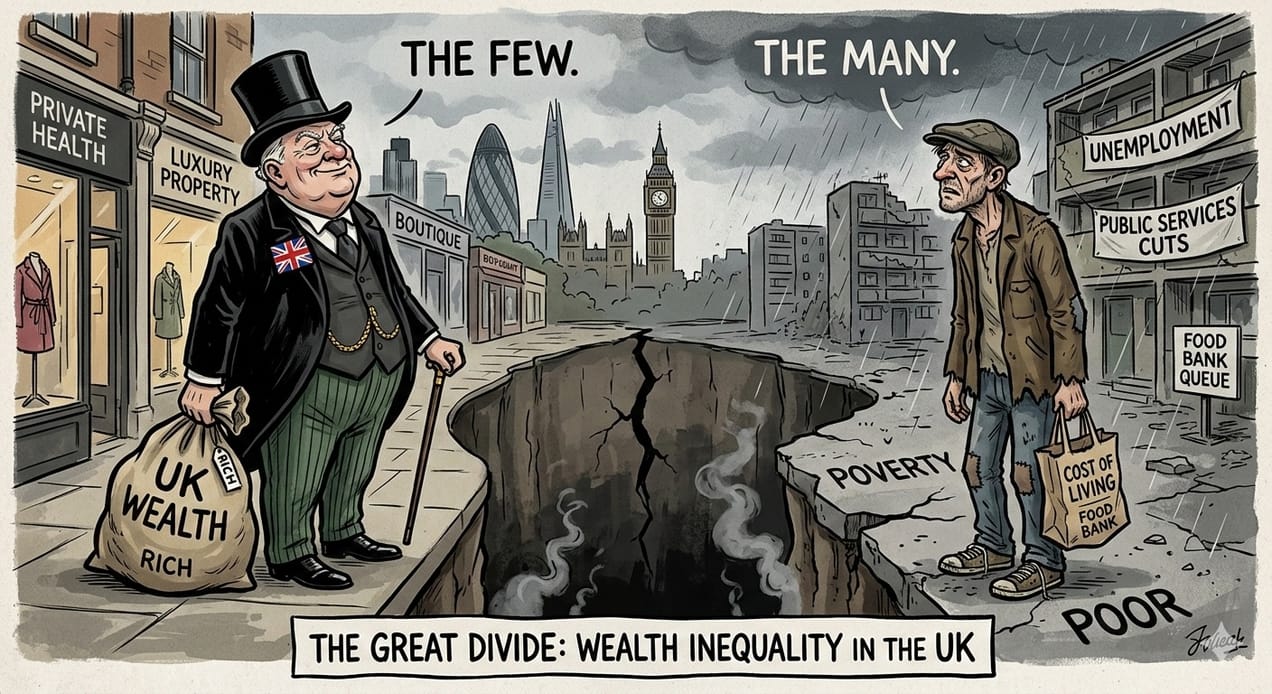
Conversations also produced opportunities for stronger political messaging. For example, on the issue of degrowth it was clear that governments, including our own, are already applying austerity to shrink public services and private household budgets while inflating the wealth of the super rich. Greens will target degrowth at the biggest global consumers and polluters – the super rich – so that the majority of us, including other species, can live better lives.
Alongside this, there was a tacit call to be bolder in pushing a radical political agenda. There was great enthusiasm for Hannah Spencer’s success in Gorton and Denton earlier this year and the powerful message of hope she brought to local communities. I noted few people were aware of Spencer’s involvement in policymaking, for example on gambling, and from my perspective it is important to acknowledge the continuity of policy and politics as a vital part of the Green movement. Effective campaigning needs collaboration across doing and thinking to punch through an increasingly hostile media landscape.
The next step for Greens is to articulate a clear vision for an ecosocial future, one that can reconcile quality of life with planetary boundaries. This another wicked problem, among the many the polycrisis presents us with, and that in itself proves the value of GEF. Bringing together a wide range of Greens with diverse experiences of governance, challenges and successes lays the foundation for a strong political strategy.
At heart, that was the most inspiring part of the Assembly. Everyone present shared values and understood the importance of the policies and politics brought to the table. There were no quibbles about the fundamental emergency of climate breakdown, or the urgency of our need to respond to the polycrisis. That basis was a fertile ground from which to explore the vital question: how to proceed? How to create a liveable future? A consolation of sorts, to know there are so many passionate and intelligent people working from the same page.