
Towards a more self-reflective Green politics
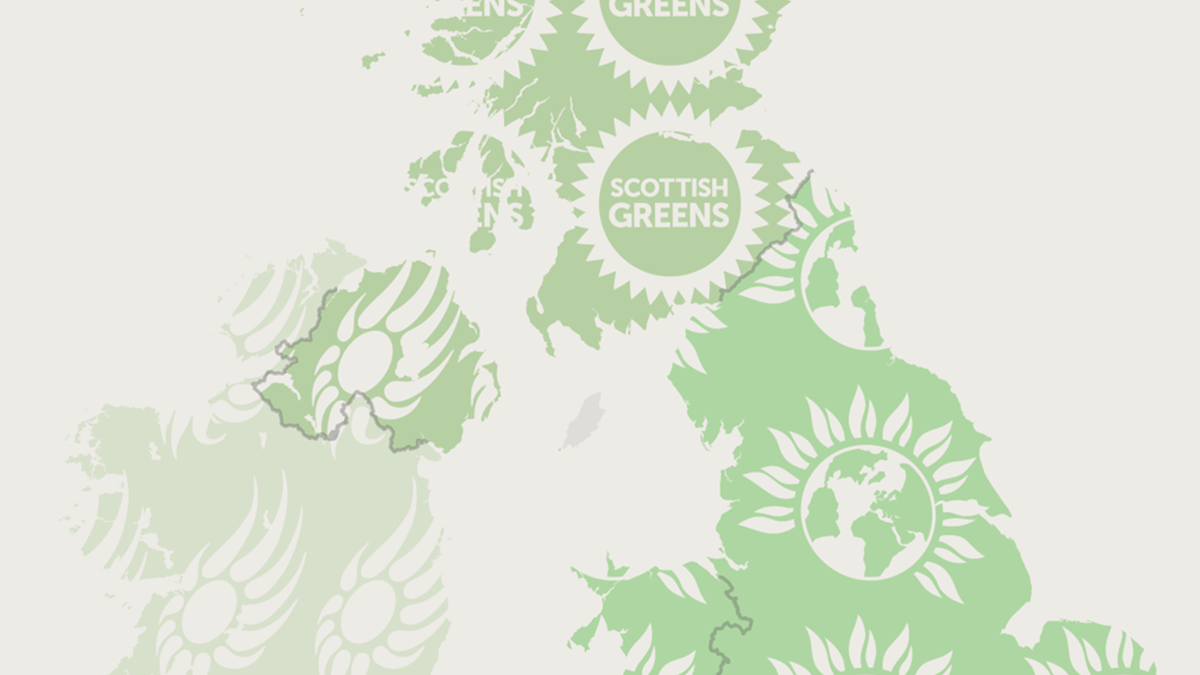
Green politics is gaining ground. But a growing number of people within the movement sense that winning power may yet require a deeper shift in political sensibility. Are you one of them?
The Green Party of England and Wales is finding mainstream traction, and for good reason: ecological breakdown is deepening, inequality is spiralling, social fabric is fraying, and more and more people sense that current ways of life are no longer viable. But we would be wrong therefore to treat the party’s political fitness for these times as complete. With growing success comes greater scrutiny - and as Green politics moves closer to the centre of public attention, it faces a harder test: whether it can deepen and sustain appeal under pressure.
Good arguments aren’t enough to land radical policies. Greens must discover how to generate real resonance: speaking to people’s lived experience, hopes, fears and longings in ways that travel further and land more deeply, without hollowing out what we stand for. This means getting better at hearing where people are really coming from beneath the surface of their opinions - and crucially, understanding the conditions that shape our own strong convictions, so that we can see beyond them, to what they might exclude. These qualities show up more readily in some areas of Green policy and comms than in others.
All of politics runs on partial truths. Every tradition has its blind spots. The assumptions, biases and emotional drivers operating within other people’s worldviews are often easy to spot. It can be much harder to see the code we are running ourselves: the inherited models through which we organise reality, assign value, and decide what counts as a legitimate concern. But without that self-awareness, politics becomes a hall of mirrors - each side increasingly caricaturing the other, each growing more certain of its own righteousness, and, as a consequence, less inclined to listen.
This is not to collapse all ethical difference into relativism - often, suspicion of Green policies is plainly reactionary. Just as often, however, it contains signal that no serious political movement can afford to ignore.
For instance, recent efforts to shift the focus of toxic national discourse about immigration toward inequality and taxation of extreme wealth can helpfully redirect public resentment toward deeper structural causes of economic pressures. But it reveals a tendency to reduce all unease around immigration to misunderstanding, prejudice and media manipulation. Feelings of insecurity, social dislocation, and erosion of trust, identity and belonging - less privileged within a particular view of moral reality - are overlooked.
Citizens in our fragmented age aren’t just interested in a bigger slice of the cake. They want to feel that politics understands the texture of their lives; their need for agency, dignity, belonging and meaning - intangible needs that can seem threatened when politicians propose to dissolve familiar boundaries. Right-populism has proved adept at speaking to these anxieties, albeit cynically. Recent Green frames offer an alternative - but their tactic of shifting the blame for social decline is incomplete.
To acknowledge these anxieties isn’t mere capitulation to exclusionary politics. Refusal to validate or include them in any problem statement can render otherwise practical policies hopelessly out of touch. A Green movement that wishes not only to critique but to govern must understand the kinds of values its own vision tends to deprioritise - and not purely so that those values can be out-manoeuvred or dismantled.
Some therefore suggest that building on the Green Party of England and Wales’s success will require a more self-aware political sensibility: a movement conscious of its own style, instincts and assumptions, and able to see its foundational values as partial and contextual even as it seeks to realise them. A Green politics shaped by greater awareness of its own worldview as construct, rather than reality itself - that can discern what’s valid in opponents’ perspectives without simply reproducing their frame.
Such a capacity is vital in an age too complex to be served by the habitual binaries that currently dominate political discourse. Too often, politics emerges as a battle of hope or realism, compassion or robustness, freedom or responsibility, plain speaking or honouring complexity; even love or power. Each pole names a real value - which makes choosing sides both emotionally compelling and rhetorically convenient. But treated as absolute, a pole is an inadequate basis for orienting collective life. The alternative is not an empty centrism, however, but a view with the capacity to accommodate seeming contradictions in deeply human values until context informs a wise choice.
This integrative capacity is core to an emerging body of social philosophy variously called ‘post-conventional;’ ‘integral;’ ‘Metamodern’... the name is less important than the shared emphasis on holding deep human values in tension: idealism and pragmatism; empathy and boundaries; conviction and questioning; structural change and the inner transformation needed to drive it. People growing attuned to this perspective often sense it before they can name it. They may recognise it in others by a tone and stance that is itself marked with paradox: expressing seriousness and play; sincerity and irony.
Green fortunes are shifting under Zack Polanski's leadership - and the freshness of recent comms carry tonal hints of this post-conventional sensibility. His cut-through campaign video, shot running through South London streets is a moving embodiment of serious play. He appears as comfortable framing love as a political emotion as he is proposing land value tax as a structural reform. He is skilled in resisting lazy either-or framing. He advocates compassionate listening to adversaries rather than point-scoring. However, some of Polanski's public comments are still strongly coded for the ‘progressive activist' social tribe with the potential to alienate outsiders, and it remains to be seen whether this freshness is purely aesthetic or can grow deeper roots.
In short, this breath of fresh air in Green comms is barely the beginning of what a post-conventional approach could mean for our political landscape.
A Green party more aware of our own cultural code and its blind spots need not become less principled, but we could become more skilled at navigating paradox and building trust - not to mention assembling a majority. Many people in and around the Green movement already feel this tension: people committed to ecological sanity and economic justice, but who also sense that some existing habits of Green and left politics may be barriers to achieving those things. This piece is an attempt to gather those people.
In the coming months, the authors of this piece and an informal group of party activists plan to convene gatherings for people in and around Green politics who feel drawn to this deeper conversation: about political self-awareness, better communication, richer empathy, and the forms of inner and cultural development that might make for wiser public life.
If some part of this feels uncomfortably familiar - or quietly exciting - then you’re probably one of the people we are trying to find. You can sign up to receive updates from the authors about these events here.
Related Work:
 Peter Sims
 Prashant Vaze
 Nadine Storey