Climate Emergency Economy Project

What would an economy that faced up to the reality of the climate emergency look like? To truly meet the challenge, the UK must rethink our industrial and economic dependency on materials and products sourced from around the world.

Over three years from 2019-2022, Green House is exploring how trade, industry and infrastructure need to change to meet zero carbon goals. In 2022 this project is organised by the Green European Foundation with the support of Green House Think Tank, Green Foundation Ireland, and Etopia, and with the financial support of the European Parliament to the Green European Foundation. In 2022 the project is focused on 'Rethinking Demand'.

At the bottm of this page you can find all the reports and events that make up this project. These build on our recent work envisioning a postgrowth Britain and our focus on climate jobs, which quantified the employment that could be created across the UK in facing up to the climate emergency. Read the strategic vision

Latest Report:

Picture
Picture
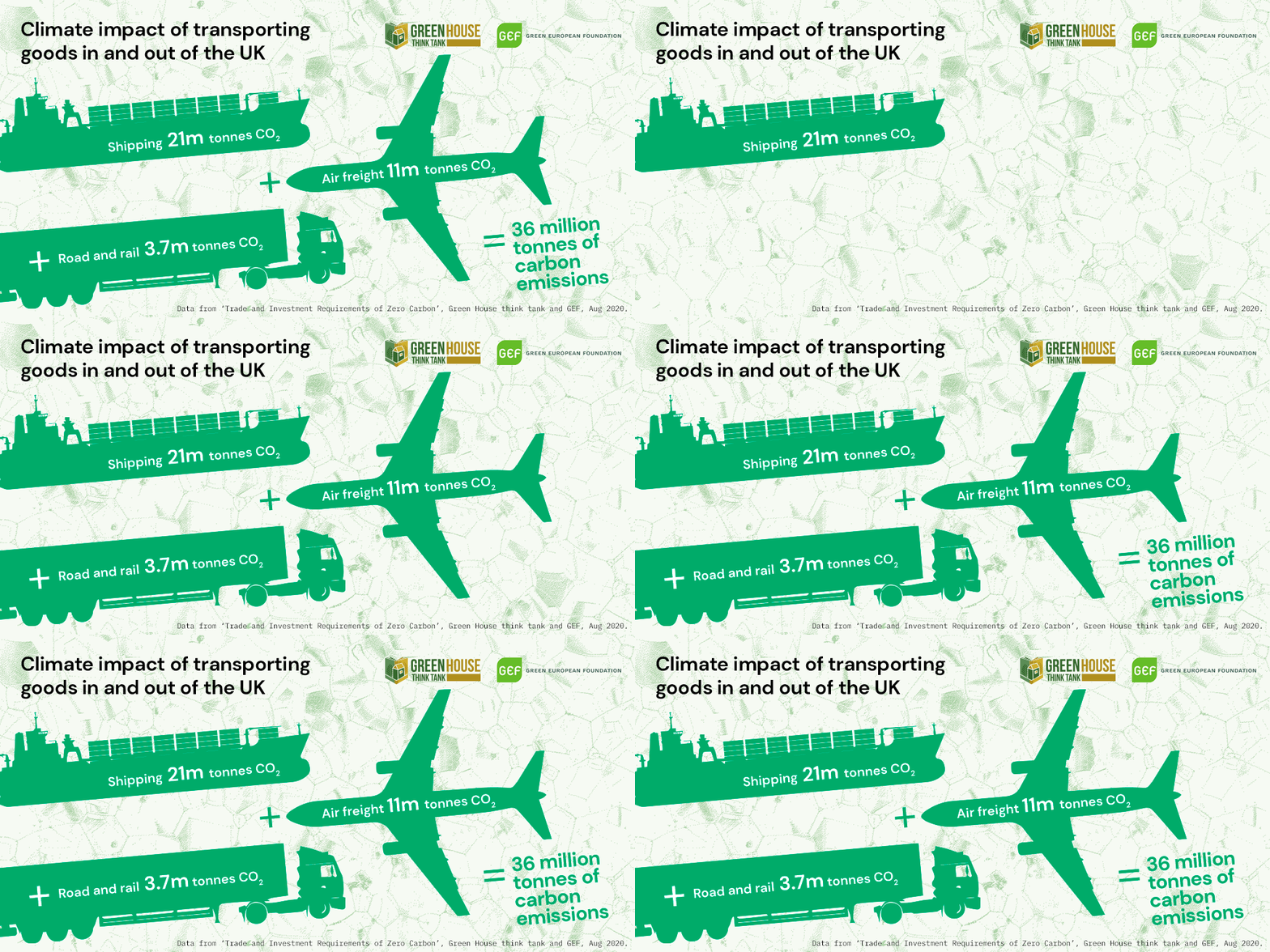
GIF highlight GHG emissions from UK Trade

This report quantifies the massive scale of transport infrastructure investment plans across the UK and EU and how this fails to align to existing climate targets. This highlights that whilst heavy goods transport, shipping and aviation are some of the hardest to decarbonise, demand for these transport modes are not being managed or constrained in line with climate commitments. The report is framed using the Zero Carbon Policy Toolkit introduced in Green House’s August 2020 report, Trade and Investment Requirements for Zero Carbon. Other key reports in this project include:


Project Video


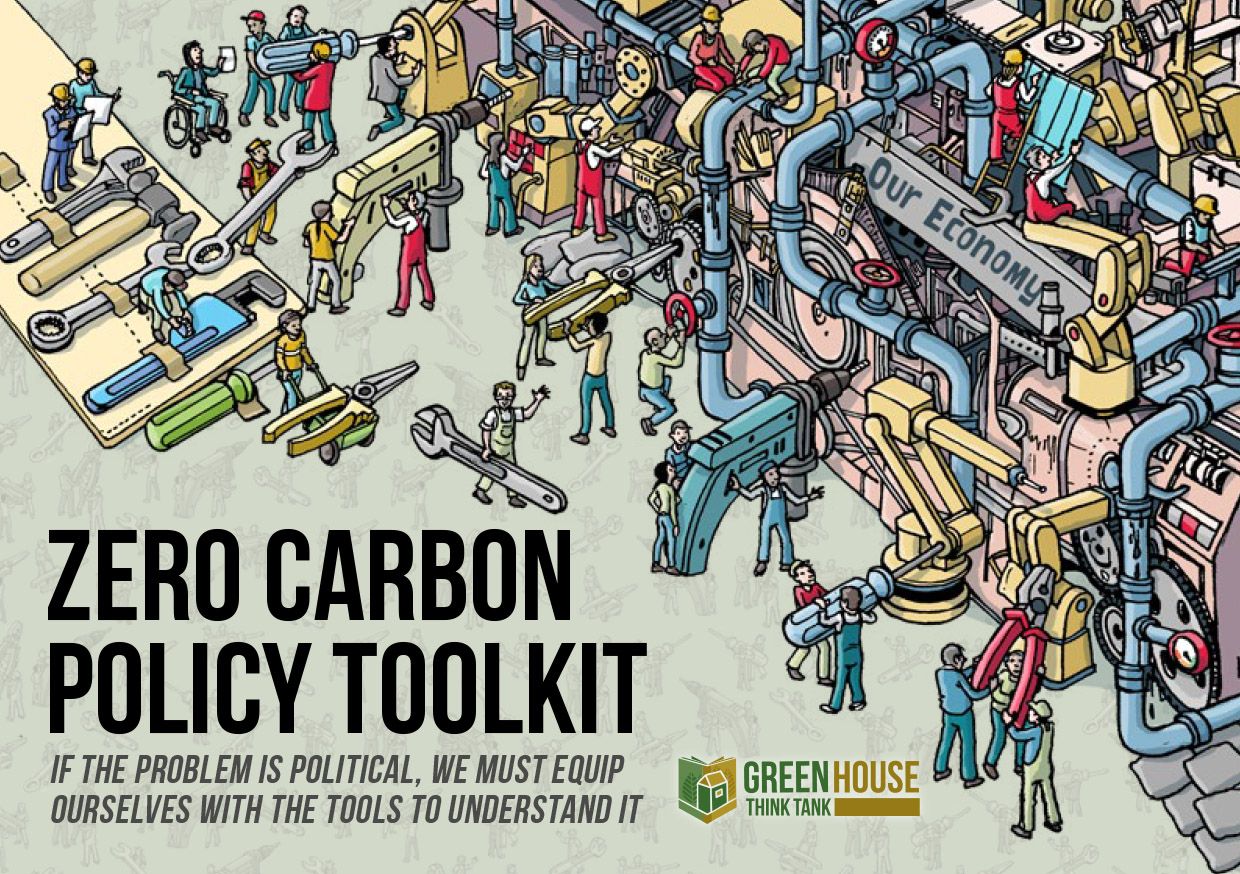
Zero Carbon Policy Toolkit

Picture
Click image to download booklet and infographic

COP26: Asking the Wrong Questions?
This gas by Peter Sims asks whether COP26 will succeed and argues that it needs to stop asking the wrong questions in order to take the opportunity to change direction
Another Brexit is Possible
This report considers that the option of remaining in close alignment with the EU is too politically difficult to achieve. Having made this assumption, it argues that the only viable option is building national resilience through more localisation combined with deeper global cooperation.
Open Letter to the Committee on Climate Change
The following letter was sent to Lord Deben and Chris Stark (Chair and Chief Exec) of the Committee on Climate Change on the 10th December 2020.


Climate Emergency Economy Project Publications and Events

Peter Sims

The Social and Environmental Requirements of a Climate Emergency Economy

Our economy is not currently zero carbon, stable or sustainable, even in economic terms. What interventions are required to deliver the rapid transition required? What must these interventions achieve and how should these requirements be defined?


Green House Think Tank

A Question of Scale

‘A Question of SCALE’ is a conversation in the context of global vulnerabilities and challenges - climate, pandemic, risks to supply chain, jobs, etc


Peter Sims

Infrastructure Requirements for Zero Carbon

This report focuses on the freight transportation, aviation and steel sectors, which, combined with cement and plastic production. To ensure Sufficient Action is being taken, our society must target the rates of change required for a rapid transition to zero carbon.


Green House Think Tank

Achieving zero carbon trade, investment and industry

At this online event some of the results from Green House's report Trade and Investment Requirements for Zero Carbon were presented, plus there were presentations by other partners in the Green European Foundation, Climate Emergency Economy project.


Green House Think Tank

Blockers and enablers for decarbonizing the Dutch energy intensive industry

This online conference follows successful events last year on Climate Jobs and a Just Transition and Climate Emergency – Raising Ambition.


Peter Sims

Trade and Investment Requirements for Zero Carbon

This report proposes a much-needed toolkit to help policy makers face up to climate reality and address the wider environmental impacts and the imbalances of power and wealth that underlie our global trade


Brian Heatley

Doughnut Economics: Seven Ways to Think Like a 21st-Century Economist

Kate Raworth's Doughnut Economics has a catchy title, appealing diagrams and has attracted some extravagant praise; George Monbiot has called her the John Maynard Keynes of the 21st Century. Is Monbiot right?


--}}