
Publications
Green House Think Tank publishes many different sorts of contribution to green politics. This includes the regulation publication of Reports, Gases, Green Reads and Newsletters, however have also published Books, Pamphlets, Consultation responses, and comms materials like flyers, posters, booklets and digital images.

Inquiry into Green Finance by the Environmental Audit Committee
In our evidence, written by Molly Scott Cato and Jonathan Essex, we suggested using an Energy Return on Energy Invested measure to assess whether an investment is green, and a much greater emphasis on public and co-operative financing of green infrastructure.

Smaller but Better: Post-Growth Public Services
In this report Andrew Pearmain and Brian Heatley argue for a distinctively Green approach to public services which goes beyond simple opposition to austerity.

The Paradox of Green Keynesianism
The persistent economic recession and the need for a transition to green infrastructure and industrial systems has led many environmentalists to call for a form of Green Keynesianism. But how can this co-exist with the fundamental commitment amongst green economists to an end to economic growth?

The Fourth Sector
The economy Kent talks about is a nascent Fourth Sector – sitting along side existing private and state sectors, and those charitable and not-for-profit outfits sometimes dubbed the Third Sector.

Turn off Greenhouse gases at source
Gerry Wolff and Oliver Tickell propose a controlling upstream system for emissions which would give us greater simplicity and lower costs in administration, fewer anomalies, a smoother path for negotiations, and fewer opportunities for fraud


Guardians of the Future: A Constitutional Case for representing and protecting Future People
Rupert Read explores ensures that long-termism and the needs of future generations are brought into the heart of UK democracy and policy processes, in order to safeguard the earth and secure intergenerational justice

Free universities! Re-configuring the Finance and Governance Models of the UK Higher Education Sector
In this paper, Cato argues that there are wider motives behind the increasing marketisation of the higher education system, and drawing on experience in a number of other countries, argues that there are alternatives which would do much less damage to the basic ideals of higher education

Offsetting Nature?: Habitat Banking and Biodiversity Offsets in the English Land Use Planning System
Hannis and Sullivan argue that by encouraging us to think that one bit of nature is much like another, biodiversity offsetting undermines the unique place-based relationships between people and nature, moving us further away from ecological sustainability.
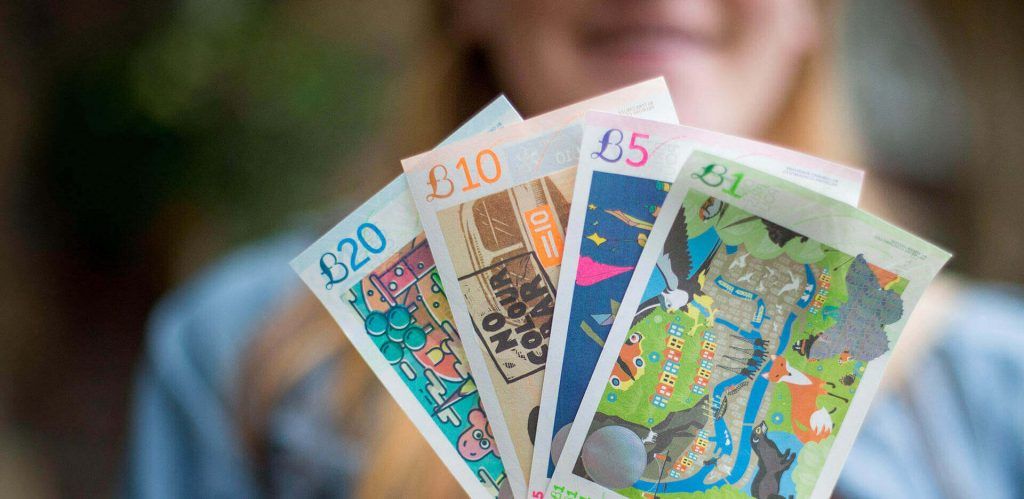
Local Liquidity: From Ineffective Demand to Community Currencies
The report includes an authoritative account of the different types of local money that are in circulation across the world from Germany's hugely successful Chiemgauer to the currency issued by Banco Palmas in Brazil and Rotterdam's Nu-Spaarpas.

Strangled by the Duopoly
John Hare and Rupert Read’s new report argues that any discussion of party funding that does not examine the wider crisis of UK democracy – including questions of electoral system, participation-rates and corporate power – is an exercise in deckchair-rearrangement.

Joined up Economics
In this common sense account Brian Heatley uses real data to connect the UK’s economic performance to the wider environment, and through an analysis of the origins of inequality shows how the economy contributes to or undermines people’s happiness and security.